
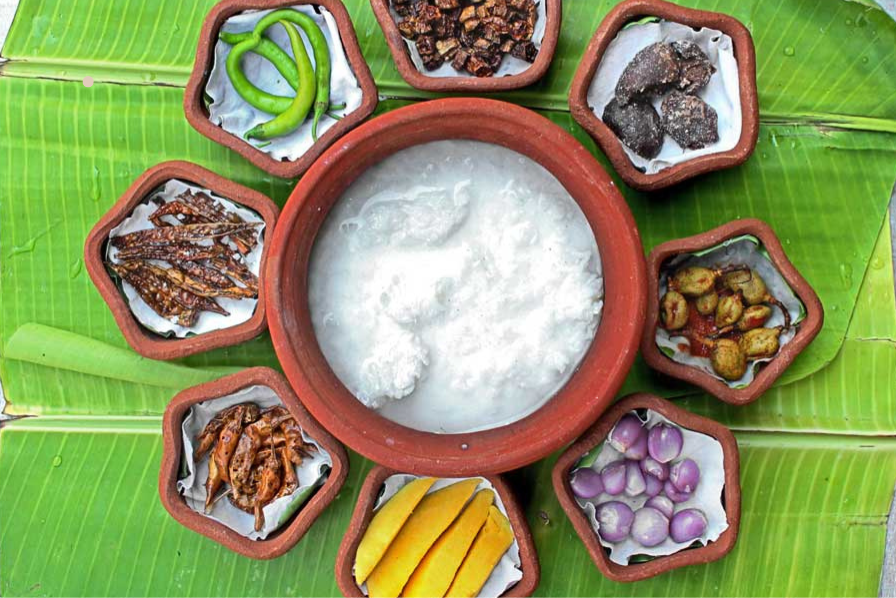
Ice biryani is not biryani at all. It’s the playful nickname for Pazhaya Soru (பழைய சோறு, “old rice”) — cooked rice soaked overnight in water so it lightly ferments, then mixed with curd and eaten cold with green chilli, raw mango and small onions. It’s a traditional Tamil Nadu breakfast known for cooling the body and being easy on the gut — and in my own experience, it helped my dry, flaky skin.
Table of Contents
- What is Ice Biryani? (Meaning)
- Ice Biryani Calories & Nutrition
- My Personal Journey
- Why 5-Star Hotels Charge ₹450 for This ₹20 Dish
- The Science Behind Skin Benefits
- How to Make Ice Biryani at Home
- Health Benefits Explained
- Frequently Asked Questions
- Your 30-Day Challenge
What is Ice Biryani (Pazhaya Soru)?
Ice Biryani, called Pazhaya Soru (“old rice”) in Tamil, is a traditional South Indian meal consumed for generations. It’s beautifully simple: leftover rice soaked overnight in water, then mixed with fresh yogurt the next morning.
The Main Components:
- Overnight-soaked rice (fermented, softened)
- Fresh yogurt (curd)
- Green chilies with oil
- Raw mango paste with dry chili
- Small raw onions
This combination creates a complete meal designed specifically for Indian climates and skin types. Nothing fancy. Nothing complicated. Just pure traditional wisdom.
Why Is It Called “Ice Biryani”?
The name is a joke that stuck. The rice is served cold (“ice”) and, with its colourful side dishes, it’s treated like a feast (“biryani”) — even though there’s no meat, masala or dum cooking involved. You’ll see it spelled ice biryani, ice biriyani or ice briyani, and Tamil homes also call it pazhaya soru or palaya soru; the tangy soaking water is neeragaram. Odisha has a similar dish called pakhala, and Assam has poita bhat.
Ice Biryani Calories & Nutrition
One serving of the recipe below (about 1 cup of soaked rice, ½ cup curd and ½ tbsp oil) works out to roughly 340 calories. Here’s the approximate breakdown:
| Ingredient (per serving) | Calories | Protein |
|---|---|---|
| Cooked white rice, 1 cup (~158 g) | ~205 kcal | ~4.3 g |
| Plain whole-milk curd, ½ cup (~120 g) | ~75 kcal | ~4.2 g |
| Coconut/sesame oil, ½ tbsp | ~60 kcal | 0 g |
| Total (without sides) | ~340 kcal | ~8.5 g |
Want it lighter? Use ¾ cup rice, skip the oil and add more curd and onion — that brings it close to 220 calories. Want more protein? Add a side of sundal or a boiled egg.
My Personal Journey with Ice Biryani
From Skeptic to Believer
I wasn’t always a believer in Ice Biryani. Back in my school days, I applied coconut oil on my face before class. My skin felt dry, flaky, and dull, especially on my cheeks and jawline. I tried expensive creams and skincare routines, but nothing worked compared to this simple traditional approach.
My grandmother would say, “Beta, eat Ice Biryani in the morning. Your skin will glow.” I rolled my eyes. How could rice and yogurt fix what products couldn’t?
The 30-Day Transformation
Desperate and skeptical, I decided to try Ice Biryani daily for 30 days.
Week 1: My skin felt hydrated. I thought it was just the season.
Week 2: The white flaky patches on my cheeks were noticeably smaller. My face didn’t look as dry after shower.
Week 3: My energy increased. No afternoon crashes. My gut felt better—no bloating. My skin looked genuinely clearer. Smaller pimples disappeared.
Week 4: My skin transformation was undeniable. My skin looked visibly brighter and more even. Friends asked if I’d gotten a facial. I hadn’t—just eaten Ice Biryani every morning.
That’s when I became a true believer. This wasn’t just breakfast anymore. (That’s one person’s experience, of course — your results may differ.)
Why 5-Star Hotels Now Charge ₹450 for This ₹20 Dish
Here’s something that fascinates me: The same dish my grandmother fed me for free is now a gourmet offering at luxury 5-star hotels across South India.
I recently visited a 5-star hotel in Bangalore. The menu had “Pazhaya Soru” in an artisanal clay pot with homemade chutneys, priced at ₹450.
The Irony: The same educated professionals who won’t eat this dish at home consider it prestigious when presented in a fancy pot with a fancy price tag. They think “Fermented Rice Wellness Bowl with Probiotic Yogurt” sounds better than “old rice and curd.”
The Business Angle: Smart restaurateurs researched traditional food benefits. They understood the wellness trend. A dish costing ₹20 to make at home now sells for ₹450 — a 2,100% markup. And customers happily pay because it’s trendy.
The Real Truth: Our ancestors understood nutrition better than we do. They didn’t need expensive treatments. They had glowing skin because they ate right. But somewhere, we forgot.
The Science Behind Ice Biryani’s Skin Benefits
Why Your Skin Loves This Dish
Fermentation Factor: When rice is soaked overnight, natural fermentation begins. Lactobacillus bacteria break down starches and proteins, making nutrients more bioavailable. A 2021 Stanford study found that a diet rich in fermented foods increased gut microbiome diversity and lowered inflammation markers — and a calmer gut often goes hand in hand with calmer skin.
The Curd Component: Yogurt contains live probiotic cultures that:
- Reduce inflammation in your digestive system
- Strengthen your gut barrier
- Decrease harmful bacteria triggering skin issues
- Support immunity (a large part of your immune system lives in the gut)
The Cooling Effect: In Ayurvedic medicine, Ice Biryani has a cooling property. This means:
- It reduces body heat (critical for Indian summers reaching 35-40°C)
- It balances excess heat
- It prevents heat-related skin issues, ensuring your skin stays healthy year-round
Skin-Specific Benefits:
- Hydration: The rice and curd combination provides 65-70% water content, helping you stay hydrated on hot days
- Nutrient Absorption: Fermentation increases B-vitamin bioavailability, essential for skin regeneration
- Anti-Inflammatory Action: Cooling nature reduces skin redness and irritation
- Gut-Skin Connection: A happier gut often shows up as fewer breakouts and less dullness
How to Make Ice Biryani at Home
Simple 2-Step Recipe (Serves 2)
Ingredients:
- 2 cups cooked rice (from yesterday or 6+ hours old)
- 1 cup fresh yogurt (curd)
- 1 cup filtered water
- Salt to taste
- 1 tablespoon oil (coconut or sesame)
Evening Preparation (Night Before)
Step 1: Prepare the Rice (5 minutes)
- Place cooked rice in a bowl
- Add 1 cup filtered water gradually
- Rice should look slightly wet but not soupy
- Cover with cloth (not plastic)
- Leave overnight (8-12 hours)
Morning Preparation (Next Day)
Step 2: Mix and Serve (5 minutes)
- Check rice—should smell slightly tangy
- Add fresh yogurt with salt mixed in
- Gently fold yogurt into rice
- Add 1 tablespoon oil
- Adjust consistency (add curd if thick, add rice if thin)
- Serve at room temperature or chilled
Side Dishes (Optional but Important)
Green Chili Oil (2 minutes):
- Heat 1 tablespoon oil
- Add 3-4 sliced green chilies with salt
- Toast 2-3 minutes until fragrant
Mango Paste (3 minutes):
- Grate 1 raw mango
- Mix with powdered dry chili and salt
Onion Relish (2 minutes):
- Slice 1 onion
- Add salt and lime juice
- Let sit 2-3 minutes
Health Benefits Explained
What I Noticed: My Skin Timeline
- Week 1: Increased hydration; reduced dryness
- Week 2: Visible reduction in dullness
- Week 3: Acne begins clearing; brighter complexion
- Week 4: Clearer, more even skin; natural glow returns
Gut Health Changes I Felt (30-60 days)
- Reduced Bloating: Much less within 2-3 weeks
- Better Digestion: Noticeable within 10 days
- Steadier Energy: Fewer afternoon crashes within 3 weeks
- Fewer Stomach Upsets: Noticeable within 4-6 weeks
Body Cooling Effect (Immediate)
- First week: Noticeably less body heat
- Continuous use: Prevention of heat-related skin issues
- Lip health: No more summer chapping
- Summer benefit: Comfortable playing sports without excessive sweating
Frequently Asked Questions
Q1: Can I use different types of rice?
Yes, but results vary. Brown rice takes 12-16 hours with more fiber. Basmati ferments in 8-10 hours with lighter texture. Parboiled rice is the sweet spot, fermenting perfectly in 8-12 hours.
Q2: What if I don’t have fresh curd?
Use Greek Yogurt (¾ cup yogurt + ¼ cup water), Buttermilk (full 1 cup), or Lactose-Free Yogurt. Avoid flavored yogurts and ultra-pasteurized yogurt without live cultures.
Q3: Is it good for lactose intolerance?
Yes, for many people. Fermentation consumes lactose. Curd has 30-50% less lactose than milk. For severe intolerance, use lactose-free yogurt or plant-based alternatives.
Q4: Can I eat this in winter?
Yes, year-round. Serve chilled in summer, warm in winter. Benefits remain constant regardless of season.
Q5: Can diabetics eat Ice Biryani?
Only with your doctor’s advice. It’s still a white-rice meal, so it raises blood sugar. If your doctor okays it, keep portions small (½-¾ cup), add plenty of curd and a protein side, and check your sugar levels after eating.
Q6: Is it good for children?
Yes, most children enjoy it, especially in summer. Use fresh curd, refrigerate the soaked rice if your kitchen is very hot, and go easy on the green chillies.
Q7: How long to see results?
In my case, my skin felt less dry in weeks 1-2, and the flaky patches and small pimples reduced by weeks 3-4. Everyone’s skin is different, so treat it as a healthy habit rather than a treatment, and see a dermatologist for persistent acne.
Q8: Should I use filtered water?
Filtered is better as it removes chlorine that interferes with fermentation. Boiled and cooled tap water works too. Plain tap water is acceptable but might taste slightly metallic.
Your 30-Day Challenge
Week 1 Goals:
- Establish preparation routine
- Notice immediate hydration benefits
- Adjust flavors to your preference
- Take baseline skin photo
Week 2-3:
- Ice Biryani becomes normal morning routine
- Notice energy changes
- Observe skin hydration improvements
Week 4:
- Compare to baseline photo
- Note what’s changed in your skin and energy
- Feel the difference in digestion
Weekly Routine:
Sunday Evening:
- Prepare 3-4 portions of rice for soaking
- Stock fresh curd
- Chop side dish ingredients
Every Morning:
- Mix soaked rice with curd (5 minutes)
- Prepare side dishes
- Eat slowly, mindfully
Seasonal Adjustments
Summer: Use more water, serve chilled, increase side dishes.
Monsoon: Reduce water, serve at room temperature
Winter: Use less water, serve warm, increase spice
Spring: Balance between summer and winter
Conclusion
Ice Biryani represents something we’ve forgotten: simple food can do a lot.
Your great-grandparents had glowing skin without expensive serums or facials. They understood that nutrition comes first.
The Real Choice:
- ₹500 at 5-star hotel or ₹20 at home?
- Expensive skincare creams or ₹40 yogurt?
- Complex routines or one simple daily meal?
If you eat Ice Biryani daily for 30 days, you’ll notice:
- Clearer, more radiant skin
- Better digestion and less bloating
- Increased energy
- Improved mood
- Natural, sustainable beauty
No marketing. No expensive products. Just traditional wisdom that works.
Keep going: pair this with a simple 3-step skincare routine for men, switch to my winter skincare essentials for dry skin when the weather turns, and rotate your breakfasts with these 7 South Indian dosa varieties.
Start tomorrow. Thank me in 30 days.
About the Author
He is an adventure seeker and marketing maniac who believes every journey is a story waiting to be told. He treats every experience in life as a lesson that happens for a reason, then turns those moments into simple, relatable stories for his readers. He is a sports and fitness enthusiast with 8 years of experience in marketing. As an adventurous person passionate about sharing knowledge, Jayaprakash created VibezDude to help people discover the power of personal experiences and traditional wisdom. Through storytelling, research, and real-life examples, Jayaprakash explores how simple lifestyle changes in skincare, wellness, travel, food, and fitness can transform your life.